

Black Feminist Practice: Reimagining Making Space
How can design, craft, architecture, and spatial practice act in relation to present issues of crisis and conflict? What role do different modes of practice, spaces, and infrastructures have in responding to global challenges — from climate change and ecological collapse, geopolitical and economic crises, and the displacement of people to issues of democracy, social justice, and equality?
In this gathering we explore how black feminist spatial practice expand the notion of spacemaking beyond logics of architecture by centring cultural production, labour and care. Presentations by Alanna Stuart and Marie-Louise Richards, introduction and moderation by Magnus Ericson.
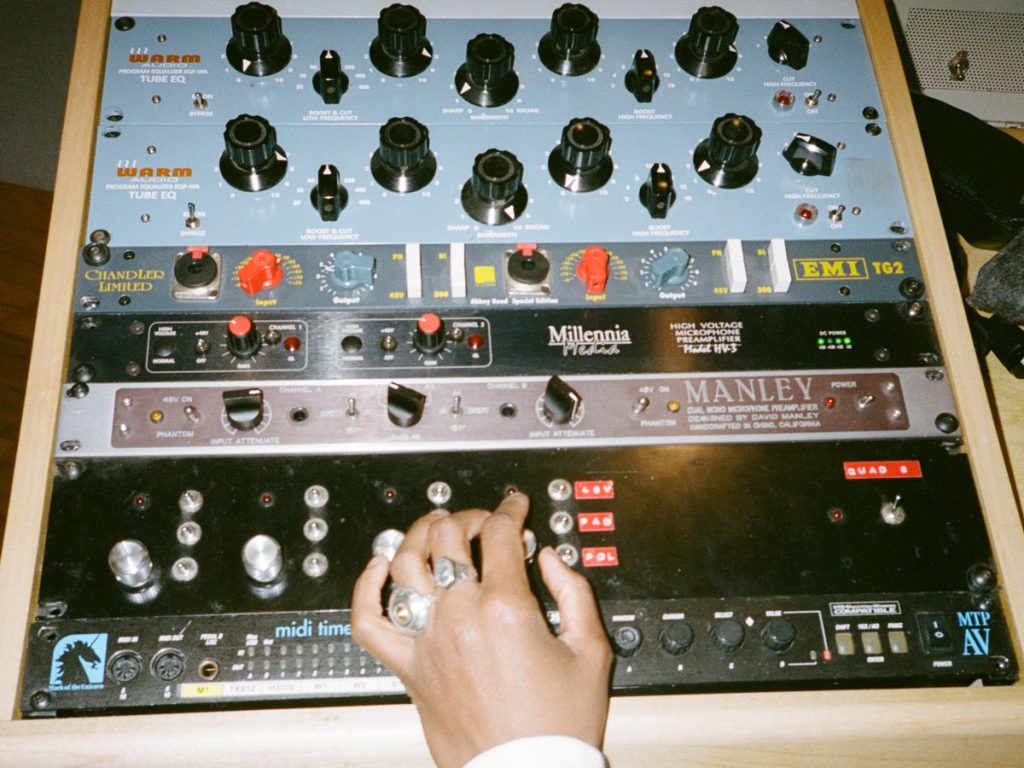
Photo by May Truong
PYNE in-studio. Toronto, Canada 2023. Photo by May Truong
Black feminist approaches reimagine spatial practices otherwise by shifting attention from form and output to the conditions through which life, relation, and imagination can unfold. “Otherwise” names ways of living and relating that refuse dominant logics. This reorientation depends on creative forms of affective and emotional labour, the work of remaining present, staying with discomfort and holding open processes without resolution. Such labour is not incidental but constitutive in sustaining the relational and experiential conditions through which alternative ways of thinking and being can emerge. In this context, black feminist practices are not only a response to crisis, but a means of generating conditions for life, relation, and imagination beyond it. Theory and practice are inseparable: knowledge emerges through lived, embodied, and ongoing processes of presence and relation.
Sharing their practices, Alanna Stuart and Marie-Louise Richards reflect on their shared Jamaican heritage and approaching space through a black feminist lens – as something not neutral or given, but as continuously produced through relations, bodies, histories, and practices. Part-memoir, part-critical analysis, Alanna Stuart retraces her own musical experience oscillating between studios in Jamaica – her father’s home country – and Canada, where she was born. Her praxis invites us to witness and sit with the insecurities and awkwardness, and joys and comforts of producing sound from a place of inbetweenness. Marie-Louise Richards practice composes conditions in which presence and relation become the ground for sustaining spaces that hold complexity without resolution and allow alternative ways of living and imagining to emerge. Drawing on her framework of ‘fugitive songs’ she invites to reflection of forms of knowledge that resist capture.
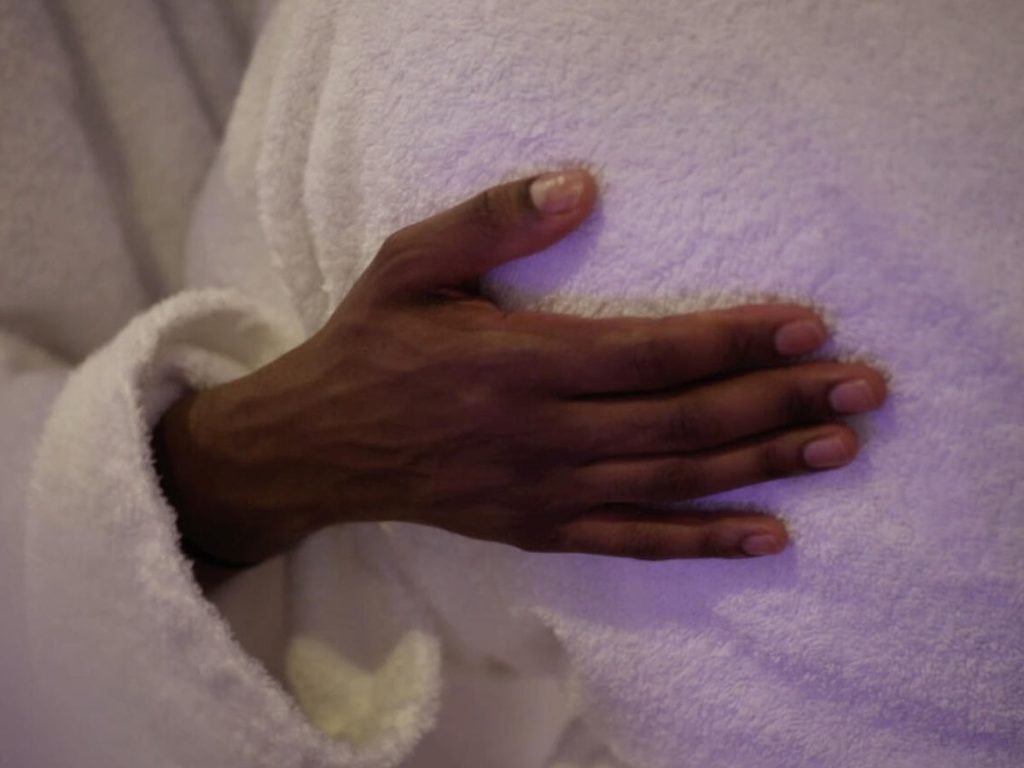
Photo by Caio Marques De Oliveira
Reconstructions 2023.
Alanna Stuart (aka PYNE) is a Caribbean-Canadian music artist-scholar, curator, and documentarian based in Toronto and Montreal, Canada. She is presently in the thick of what she dubs a ‘Femmehall’ praxis: a feminine approach to dancehall reggae music production and performance. As a research project, Femmehall is a music studio prototype, guided by dancehall music production studio practices and a Black feminist care ethic. In both music making and research, she’s motivated to play an agentive role in building her own new world of sound to reflect a diasporic present–layered, complex, and raw. Alanna Stuart is currently artist in Residence at IASPIS.
Marie-Louise Richard is an architect, lecturer, researcher based in Stockholm. Her work traverses art, architecture, social practice, and writing. She is the founder and leader of the experimental platform and art project Reconstructions –operating as a postmasters-course in the Department of Research and Further Education in Architecture and Art at the Royal Institute of Art in Stockholm. Her work examines the reconstructions of “black feminist spatial futures,” and by centring affect, labour and care her practice is largely relational and process-based. Together with Cathryn Klasto, she is co-editor of the special issue “Citations” in PARSE Journal (September 2023).
Magnus Ericson is Head of Applied arts IASPIS, responsible for IASPIS’ programme related to design, craft, architecture, spatial and urban practice.
Black Feminist Practice: Reimagining Making Space is the third in a new series of public events at IASPIS organised as part of Practice Matters, a project exploring design, craft, architecture, and spatial practice and its ability to act in relation to present urgent issues of crisis and conflicts. The project is developed in collaboration between IASPIS and Salt.